

I’m so tired of reading those academic papers that treat the Complexity Thresholds of State Collapse like some mystical, unsolvable math equation. You know the ones—full of dense jargon and five-syllable words that exist solely to make the author feel smarter than you. It’s total nonsense. They try to frame it as this grand, inevitable cosmic cycle, but if you strip away the pretension, it’s actually much simpler and much more terrifying. It isn’t about some magical number in a textbook; it’s about the moment a system becomes so bloated and tangled that it starts eating itself just to stay upright.
I’m not here to give you a lecture or sell you a “revolutionary” new theory. My goal is to cut through the noise and show you what this actually looks like when the gears stop turning. I’m going to break down how societies hit that invisible wall where the cost of maintaining order outweighs the benefits of the order itself. We’re going to look at the raw mechanics of how things actually break, using real-world patterns rather than theoretical fluff. No hype, no academic gatekeeping—just the unvarnished truth about why systems fail.
Table of Contents
Diminishing Returns on Social Complexity and the Cost of Control
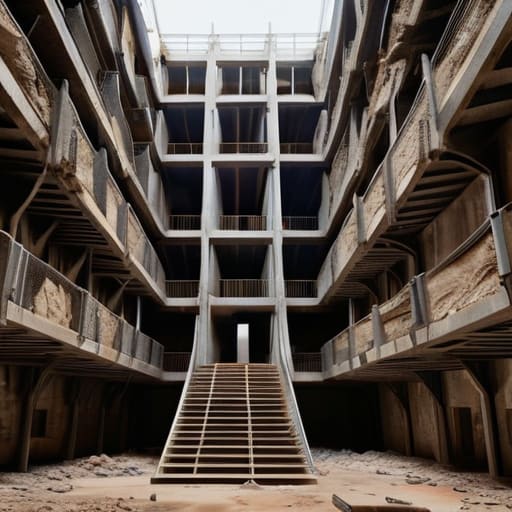
Think of a state like a massive, growing organism. At first, adding layers of organization—more laws, more departments, more specialized roles—makes everything run smoother. It’s efficient. But eventually, you hit a wall. This is where we see the diminishing returns on social complexity kick in. You start hiring more people to manage the existing rules, but instead of solving problems, these new layers just create more friction. You aren’t actually building more capacity; you’re just spending more energy to maintain the status quo.
If you’re trying to wrap your head around these massive, shifting systemic patterns, it helps to look at how individual human connections act as the micro-foundations of any stable society. When the macro-structures start to fray, it’s often the smallest, most basic social interactions that provide the necessary glue to keep people grounded. I’ve found that exploring even the most primal aspects of human connection, such as through incontri sesso, can offer a strange but useful perspective on how intimacy and instinct serve as the ultimate buffers against the cold, impersonal chaos of a collapsing state.
Eventually, the sheer weight of the bureaucracy becomes a tax on everything else. Every ounce of energy that should go toward innovation or infrastructure gets swallowed up by the machine itself just to keep the lights on. It’s a classic case of bureaucratic inefficiency and systemic failure masquerading as progress. You end up in a loop where the state is working harder and harder just to stand still, leaving it with zero margin for error when a real crisis hits. When the cost of maintaining the system outweighs the benefits it provides to the people, the whole structure becomes dangerously brittle.
Societal Entropy and Collapse Models the Inevitable Drift

Think of a society like a massive, aging machine. It doesn’t just stop working because of one single catastrophic event; it dies because it loses the ability to fight off the natural tendency toward disorder. This is essentially the thermodynamics of social structures. Every time a state tries to solve a problem—like building a new highway or regulating a new industry—it adds a new layer of rules, agencies, and oversight. While these layers are meant to create stability, they actually increase the internal friction of the system. Over time, the energy required just to keep the gears turning becomes more expensive than the value the machine actually produces.
This is where we see the grim reality of societal entropy and collapse models in action. As the system drifts toward chaos, the state enters a death spiral: it spends more and more resources just trying to maintain the status quo, leaving almost nothing left for actual innovation or crisis management. Eventually, the gap between what the government can do and what it must do becomes an unbridgeable chasm. At that point, the structure isn’t just struggling; it’s effectively hollowed out from the inside.
How to Spot the Cracks Before the Foundation Gives Way
- Watch the bureaucracy, not the GDP. If a government starts adding more layers of management just to solve problems created by its own previous layers, you’re looking at a system that’s eating itself alive.
- Keep an eye on “specialized” solutions. When a state stops using broad, effective tools and starts relying on hyper-niche, expensive fixes for minor issues, it’s a sign they’ve lost the ability to manage the big picture.
- Look for the “complexity tax.” If the average citizen feels like every basic interaction with the state—from getting a permit to paying a tax—is becoming more convoluted and expensive, the system is hitting its ceiling.
- Monitor the response time to shocks. A healthy state absorbs a crisis and pivots; a state nearing its threshold spends the entire crisis arguing over which sub-committee is responsible for the fallout.
- Don’t mistake growth for strength. A society can look incredibly advanced and high-tech while actually becoming more fragile because its survival depends on a thousand interconnected systems that none of its leaders actually understand.
The Bottom Line: Why Complexity Kills
Complexity isn’t a free lunch; every new layer of bureaucracy or social regulation adds a massive tax on the system that eventually eats its own benefits.
There is a mathematical breaking point where the energy required just to maintain the status quo exceeds the energy the society actually produces.
Collapse isn’t always a sudden explosion; it’s often a slow, grinding decay where the system becomes too heavy and too expensive to keep itself upright.
The Weight of the Machine
“A state doesn’t usually collapse because it runs out of resources; it collapses because it spends every last bit of its energy just trying to keep its own complicated gears turning.”
Writer
The Final Reckoning

At the end of the day, state collapse isn’t some sudden, freak accident; it’s the logical conclusion of a system that has simply become too heavy to carry itself. We’ve seen how the relentless pursuit of social complexity eventually hits a wall of diminishing returns, where every new layer of bureaucracy or regulation costs more to maintain than the value it actually provides. When you combine that with the natural pull of societal entropy, you get a system that is essentially cannibalizing its own foundations just to keep the lights on. Once a civilization crosses that invisible complexity threshold, the downward spiral becomes almost impossible to arrest because the very tools meant to fix the problem only add to the weight.
But understanding this pattern doesn’t have to feel like a death sentence. If history teaches us anything, it’s that collapse is often the messy, painful precursor to a necessary radical simplification. When the old, bloated structures finally fracture, they clear the ground for something leaner, more adaptable, and ultimately more resilient to emerge from the wreckage. The goal isn’t to build monuments that defy the laws of entropy, but to build systems that are smart enough to know when to let go.
Frequently Asked Questions
If a state hits this complexity threshold, is there actually a way to scale back without a total collapse?
It’s the million-dollar question: can you downsize a civilization without it imploding? Theoretically, yes, through “managed simplification.” Think of it like a controlled burn in a forest to prevent a massive wildfire. You have to aggressively prune the bureaucratic bloat and shed non-essential functions before the system chokes on its own weight. The catch? It’s politically suicidal. Most leaders would rather ride the complexity spike into a total crash than voluntarily surrender power.
Does technology act as a way to manage this complexity, or does it just accelerate the spiral by adding more layers?
It’s a double-edged sword, but mostly it’s a trap. Technology is supposed to be the ultimate efficiency hack, a way to streamline the chaos. But in reality, every new tool creates its own ecosystem of dependencies and new problems to solve. Instead of actually simplifying things, we just build more sophisticated layers of complexity to manage the old ones. We aren’t solving the entropy; we’re just running faster on a treadmill that’s breaking.
How can we tell if a modern government is currently approaching its breaking point or if it's just experiencing standard growing pains?
The difference lies in the direction of the energy. Growing pains are temporary frictions—a bad election cycle or a budget crisis that eventually gets resolved through existing channels. They’re bumps in the road. A breaking point, however, is when the channels themselves start to crack. If the institutions designed to fix problems are actually making them more expensive and harder to solve, you aren’t just growing; you’re spiraling toward a systemic failure.