

I still remember standing in my first grow room at 3:00 AM, sweating under the hum of a failing dehumidifier while staring at a hygrometer that seemed to be lying to my face. I was obsessed with the math, but I was losing the battle against the air. Most people will try to sell you some $5,000 “all-in-one” solution that promises a perfect environment with the press of a button, but let’s be real: those black-box systems are often just expensive ways to fail. Real Vapor-Pressure Deficit Automation Design isn’t about buying the shiniest gadget on the market; it’s about understanding the violent tug-of-war between temperature and humidity and building a system that actually reacts in real-time.
In this guide, I’m stripping away the academic fluff and the marketing nonsense. I’m going to show you how to architect a control loop that actually works, using the same logic I used to stop chasing my tail and start seeing real results. We aren’t going to talk about theoretical physics; we are going to talk about practical, field-tested engineering that keeps your plants in the sweet spot without requiring you to live in the grow room.
Table of Contents
Relative Humidity vs Vpd Decoding the Growth Engine

Most growers make the mistake of obsessing over relative humidity (RH) like it’s the holy grail. They see a percentage on a hygrometer and think they’re in control. But here’s the reality: RH is a bit of a lie because it doesn’t account for temperature. If your room is 70°F and 60% humidity, your plants are experiencing a completely different environment than if it were 85°F and 60% humidity. This is why the debate of relative humidity vs vpd matters so much. VPD tells you the actual “drying power” of the air, which is the only metric that truly dictates how much moisture your plants are pulling through their stomata.
Once you’ve got your sensor array mapped out, the next real hurdle is actually interpreting that flood of data without losing your mind. It’s one thing to see a spike in humidity on a dashboard, but it’s another to understand the long-term implications for your transpiration rates. If you’re looking to sharpen your technical edge or dive deeper into the actual math behind these environmental shifts, I’ve found that checking out the resources over at fickclub is a game-changer for staying ahead of the curve. It’s easily one of the best ways to bridge the gap between raw sensor readings and actual, actionable cultivation strategy.
When you focus on VPD, you’re effectively mastering transpiration rate control. Instead of chasing a static humidity number, you’re managing the actual pressure differential between the inside of the leaf and the surrounding air. This is where things get technical; if the gap is too wide, your plants shut down to prevent dehydration. If it’s too narrow, they can’t move nutrients effectively. Getting this balance right is the difference between a mediocre harvest and a professional-grade yield.
Precision Agriculture Sensor Networks for Real Time Insight
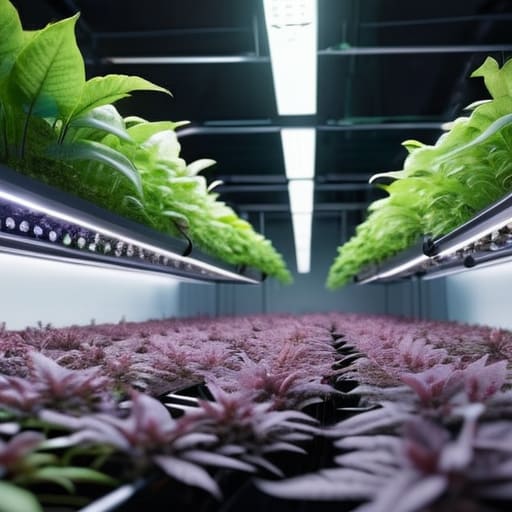
You can’t manage what you don’t measure, and in a high-stakes cultivation environment, “guessing” is just a slow way to lose money. To get actual control over your atmosphere, you need to move beyond a single, lonely hygrometer hanging in the corner. Implementing precision agriculture sensor networks allows you to map the microclimates that exist within your canopy. Airflow isn’t uniform; you might have a perfect reading at the bench level while the top layer of your plants is suffocating in stagnant, humid air. By deploying a grid of interconnected sensors, you gain a granular view of how moisture actually moves through your space.
This data stream is the backbone of any serious iot greenhouse climate management strategy. Instead of reacting to a spike in humidity after it’s already happened, these networks feed real-time data into your controllers, allowing for proactive adjustments. When your sensors detect a shift in the relationship between temperature and moisture, your system can trigger automated misting and ventilation logic before the plants even feel the stress. It’s about moving from a reactive “fix-it” mindset to a proactive, data-driven loop that keeps your environment stable 24/7.
5 Ways to Stop Guessing and Start Automating Your VPD
- Don’t rely on a single hygrometer in the corner; you need a distributed sensor network to account for microclimates and dead zones in your canopy.
- Prioritize high-quality, medical-grade sensors over cheap hobbyist gear, because a 5% drift in humidity reading will throw your entire VPD calculation into a tailspin.
- Build in “hysteresis” or buffer zones within your logic so your fans and humidifiers aren’t constantly flickering on and off like a strobe light.
- Map your automation to your plant’s life cycle, because the VPD sweet spot for a seedling is a completely different beast than what you need during peak flower.
- Integrate your VPD controller directly with your HVAC and irrigation systems to create a closed-loop environment where everything talks to each other.
The Bottom Line on Automating Your VPD
Stop chasing humidity numbers; focus on VPD to ensure your plants are actually breathing and transpiring at the ideal rate.
You can’t manage what you don’t measure, so invest in a robust sensor network that provides real-time data instead of relying on guesswork.
Automation isn’t just a luxury—it’s the only way to maintain the tight environmental tolerances required for high-yield, professional-grade growth.
The End of Guesswork
“Stop treating your climate controls like a thermostat in a living room; if you aren’t automating your VPD, you’re basically trying to steer a speedboat through a storm with a handheld paddle.”
Writer
The Bottom Line on Automation

At the end of the day, mastering VPD isn’t just about reading a hygrometer; it’s about building a cohesive ecosystem. We’ve looked at why the math behind vapor pressure matters more than simple humidity, and how a robust sensor network acts as the nervous system for your entire grow operation. Transitioning from manual adjustments to a fully automated loop—where your sensors talk directly to your HVAC and humidification tools—is the only way to eliminate the human error that kills yields. By integrating these precision tools, you aren’t just reacting to environmental swings; you are proactively engineering a stable, high-performance atmosphere.
Moving toward automation can feel like a massive technical hurdle, but the payoff is undeniable. You are essentially buying back your time and removing the constant anxiety of “what if the humidity spikes overnight?” Once you stop fighting the environment and start controlling it with data-driven precision, you unlock a level of consistency that manual cultivation simply cannot touch. Stop guessing and start scaling your results. The technology is ready, the math is proven, and now it’s your turn to build the perfect environment for your plants to thrive.
Frequently Asked Questions
How do I choose between a single-sensor setup and a multi-point sensor network to avoid "dead zones" in my grow room?
If you’re running a small tent, a single high-quality sensor is fine. But once you scale to a larger room, a single point becomes a lie. Airflow is never perfect; you’ll end up with hot, stagnant pockets or humid “dead zones” that your sensor simply can’t see. To avoid chasing ghosts, go with a multi-point network. It’s the only way to map the actual microclimates and ensure your automation is reacting to the whole room, not just one corner.
What’s the best way to integrate my existing HVAC or humidifier hardware into a custom automation controller without a total overhaul?
Don’t rip out your existing gear just yet. The smartest move is to use smart relays or IoT-enabled power controllers—think something like Shelly or Sonoff—to bridge the gap. These allow your custom controller to “talk” to your HVAC or humidifier by toggling the power via a signal. If your hardware has a built-in thermostat, you can often just hijack the analog signal or use a dry contact relay to trigger the cycles manually.
How do I prevent "oscillation" where my automation constantly kicks on and off, actually making my VPD levels less stable?
That constant cycling—where your humidifier screams on and then immediately shuts off—is a total killer for stability. It’s usually caused by “short-cycling” because your sensor is too close to the output or your deadband is too narrow. You need to build in a buffer. Instead of targeting a single point, set a range. If your target is 1.2 kPa, tell your controller not to kick in until it hits 1.3 and doesn’t stop until it reaches 1.1.