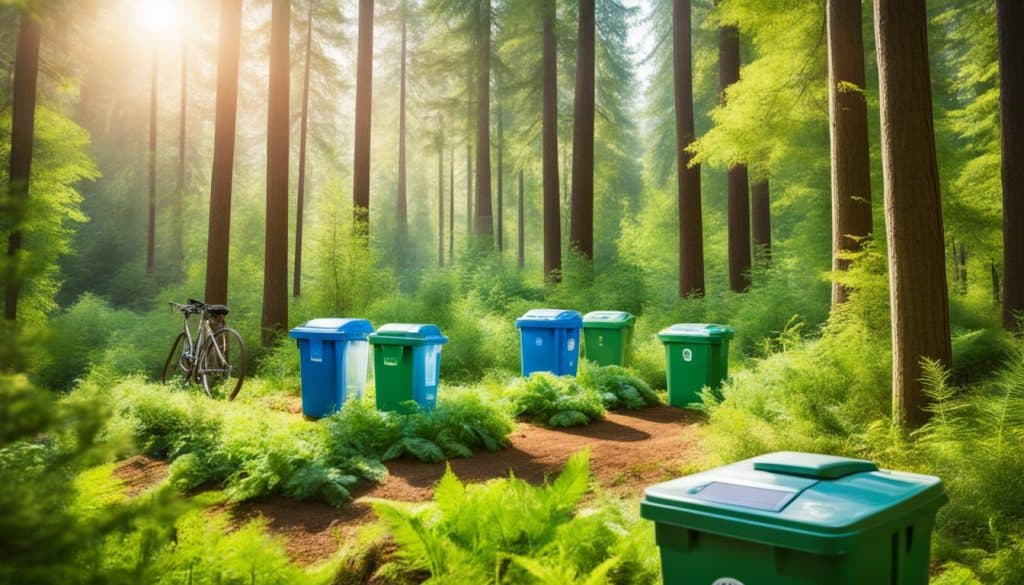

Did you know a family of four uses 400 gallons of water daily, says the EPA? This fact shows how our daily actions affect the planet. By choosing eco-friendly habits, we help the planet and ourselves.
This article will give you easy tips to live more sustainably. You can cut down on energy use, use things again, and recycle. These actions can make a big difference in our planet’s health.
Reduce Your Energy Consumption
Reducing your energy use is a key step towards a sustainable future. By using eco-friendly tips and energy-efficient appliances, you can make a big difference. This helps lower your carbon footprint and your utility bills too.
Did you know emissions from high-income cities could double by 2050? To protect future generations, we need to cut emissions by two-thirds by 2030. Cutting your energy use is a way to help with this goal.
Energy-Saving Light Bulbs
Energy-saving light bulbs can cut carbon emissions by up to 40kg a year. Switching to LED or CFL bulbs uses less energy and makes your lights last longer. This simple change helps reduce greenhouse gases and lowers your bills.
Energy-Efficient Appliances
Choosing energy-efficient appliances saves energy and money. Appliances with high energy ratings, like boilers and heat pumps, use less energy over time. For example, modern boilers are 25% more efficient than older ones.
| Appliance | Energy Efficiency Benefits |
|---|---|
| Convection Ovens | Use approximately 20% less energy compared to traditional ovens |
| Microwaves | Heat food quickly and use minimal electricity |
| Washers and Dryers | High-efficiency washers save a lot of water and reduce hot water use. Energy Star-certified dryers with sensors and smart features cut energy use by up to 20%. |
By picking energy-efficient appliances, you help the environment and enjoy modern technology’s benefits.
Smart Controls and Thermostats
Smart controls and thermostats, like Google’s Nest, can greatly reduce your home’s energy use. UK homes with Nest thermostats saved 16.5% on energy. These devices adjust your temperature automatically for better efficiency and comfort.
Sealing Gaps and Insulation
Up to 25% of a home’s heating energy can leak through the roof. Gaps in windows, doors, and floors can lose 40% of heating energy. Insulating your home and sealing gaps keeps heat in, saving energy and making your home more comfortable.

Every change you make helps the planet. Cutting your energy use protects the environment and saves you money. Adopt these eco-friendly tips and choose efficient appliances for a greener lifestyle.
Embrace Reusability and Recycling
Teach your family about recycling and make it fun. Turn it into a game. Give your kids their own recycling containers and challenge them to fill it up for a prize.
Recycling helps keep materials out of landfills and supports the environment[1]. By recycling together, you can all reduce waste and help the planet.
Try to avoid single-use items like plastic water bottles and paper towels. Use reusable items instead. Choose refillable water bottles, cloth towels, and durable containers for food.
Buying used goods is also good for the planet. You can find furniture, clothes, and electronics secondhand. This helps reduce waste and supports the circular economy.
By choosing reusability and recycling, you’re helping to reduce waste. These small changes can make a big difference. You and your family can live more sustainably and help create a better future.
References:
- Percentage of Materials Diverted from Landfills: Proper recycling can divert a significant percentage of materials from ending up in landfills, contributing to environmental sustainability.
- Reduce, Reuse, Recycle: Using reusable items like water bottles and shopping bags can cut down on plastic use. This helps reduce plastic waste. Proper recycling also keeps more materials out of landfills, which is good for waste management.
| Eco-Friendly Habit | Benefits |
|---|---|
| Recycling | Diverts materials from landfills, reduces waste |
| Skipping single-use items | Decreases plastic waste generation |
| Buying used goods | Reduces waste, supports the circular economy |
Choose Plant-Based Meals
Adding plant-based meals to your family’s diet is good for the planet and your health. It cuts down on the environmental harm from food production. By eating more plant-based foods, you help reduce the use of land, water, and resources.
A diet rich in plants needs less land, water, and resources than one full of meat. Animal farming is behind 65% of nitrous oxide emissions and uses half of the world’s freshwater. It also causes 15% of greenhouse gas emissions and takes up 70% of agricultural land.
Choosing plant-based meals is good for your health too. Eating more plants can lower the risk of heart disease and diabetes. It’s a win-win for you and the planet.
Starting with plant-based eating? Try going meatless one day a week. This small step can greatly reduce your carbon footprint and support sustainable food. Look for tasty vegetarian or vegan recipes to explore new flavors.
You can also support sustainable food by eating at places that care about the environment. Choose restaurants that use local ingredients, reduce waste, and offer plant-based dishes. By doing this, you help lessen the food industry’s carbon footprint.
Reducing food waste is another key part of eating sustainably. About one-third of all food goes to waste each year. Try to use leftovers and freeze food before it spoils. This helps cut down on the environmental impact of food production and saves money too.

In summary, choosing plant-based meals is a great way to live more sustainably. By eating less meat and wasting less food, you help the environment, stay healthy, and reduce your carbon footprint. Let’s make choices that are better for our planet and our health.
Shop Secondhand and Choose Quality
Shopping secondhand is a smart way to save money and help the planet. Did you know that 11.3 million tons of textile waste end up in U.S. landfills each year? This adds up to 81.5 pounds of waste per person annually.
By choosing secondhand, you save money and keep items from ending up in landfills. These items are often 50% cheaper than new ones. Plus, you’ll find unique and high-quality items you won’t see in regular stores.
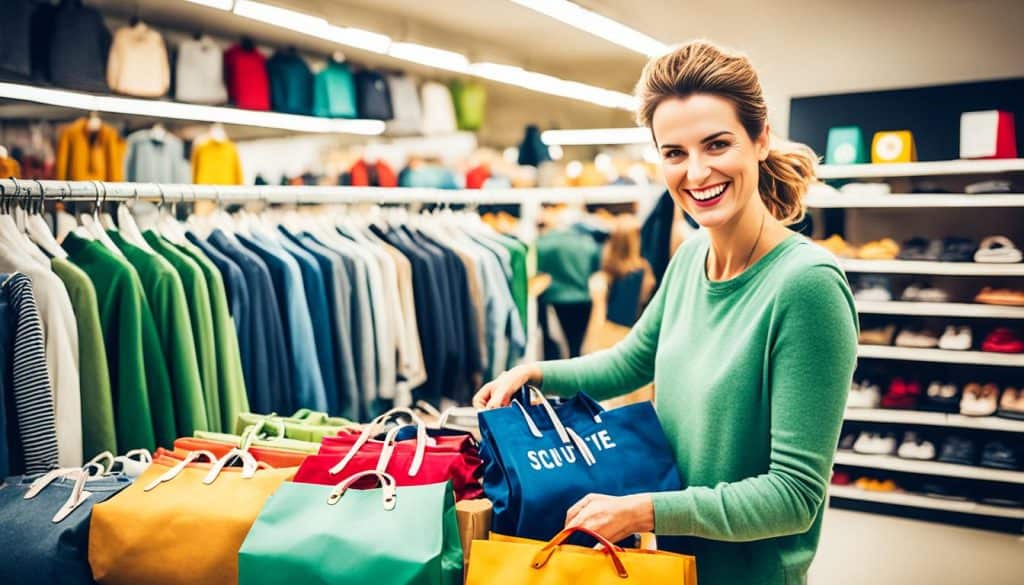
Shopping secondhand also saves energy and water. Making new clothes uses a lot of these resources. For example, making a pair of jeans requires 1,800 gallons of water. By picking secondhand, you help save these resources.
Thrift shopping also cuts down on carbon emissions. Making and shipping new goods harms the environment. By buying secondhand, you reduce the carbon footprint from production and shipping.
Moreover, it supports local economies and promotes sustainable growth. Buying from thrift stores and local sellers creates jobs and boosts community resources. It’s a way to shop without guilt while helping your community.
| Benefits of Shopping Secondhand |
|---|
| Extends garment lifespan, reducing demand for new clothing production |
| Conserves resources by reducing raw material, energy, and water consumption |
| Reduces carbon footprint associated with manufacturing and transportation |
| Supports local economies and creates job opportunities |
| Promotes ethical consumption and sends a message against exploitative labor conditions |
| Encourages sustainable practices and reduces demand for new goods |
| Allows for personal expression and discovery of unique styles |
| Supports charitable causes through proceeds from sales |
Choosing quality products is key to sustainability. Buying durable items saves you money and reduces waste. Instead of disposable items, go for ones that last longer. Repairing and upcycling clothes also helps.
When donating to thrift stores, make sure items are in good shape. This helps make secondhand shopping sustainable by ensuring only reusable items are sold.
In summary, shopping secondhand and picking quality items is good for the planet and your wallet. It reduces waste, saves resources, and supports local communities. This helps create a more sustainable and ethical future.
Reduce Transportation Impact
Reducing your transportation impact is key to being eco-friendly. I try to walk, bike, or use public transport instead of driving. This choice cuts down on carbon emissions and saves money on fuel and parking.
Buying in bulk is another way to lessen transportation impact. It reduces packaging waste and cuts down on shopping trips. This approach saves time and helps the environment.
Whether it’s walking, biking, or taking the bus, these habits make a difference. I’m proud of the small changes I make that help our planet. Let’s all try walking, biking, using public transport, and buying in bulk. Together, we can make our future greener.