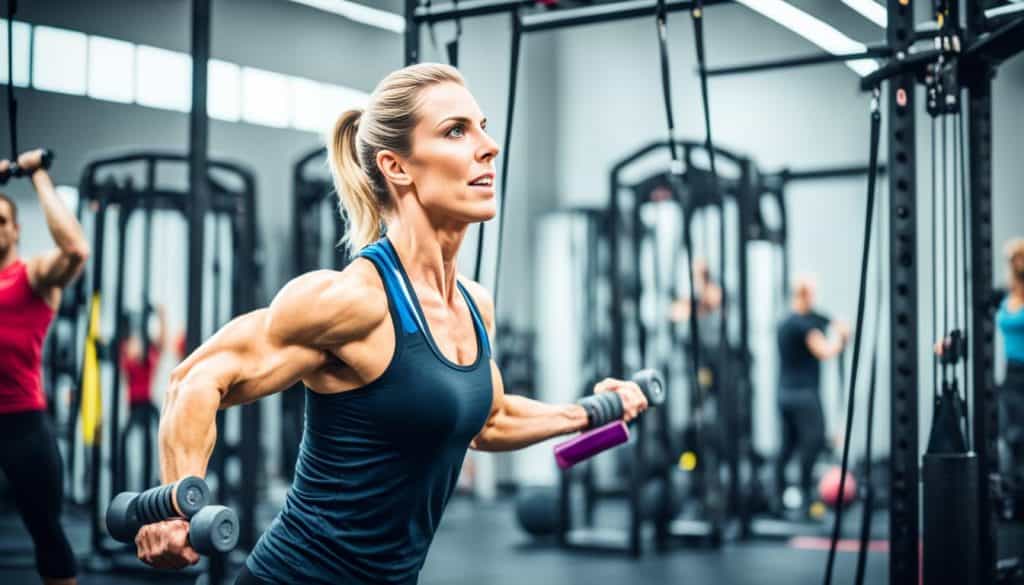

Did you know functional fitness is a big hit in the fitness world? The ACSM’s Health & Fitness Journal® found it’s been a top trend since 2016. It’s still going strong.
So, what’s functional fitness all about? It’s about doing workouts that feel like real-life activities. These exercises help build strength and improve how you move. They make everyday tasks easier.
Functional fitness is set to keep getting more popular in 2024. It’s perfect for those looking to get ready for daily life. It’s all about staying healthy and moving well.
Key Takeaways:
- Functional fitness has been the leading trend in the fitness industry since 2016.
- It focuses on using natural movements to build strength and improve mobility.
- The trend emphasizes exercises that mimic real-life movements for practical benefits.
- Functional fitness is predicted to continue its rise in popularity in 2024.
- It offers a holistic approach to fitness, enhancing overall well-being.
Fitness Wearables and Advanced Technology
Fitness wearables have changed how we track our health and fitness. They use advanced sensors to track more than just steps. They can monitor heart rate, sleep, calories burned, and stress levels. This gives us deep insights into our health.
AI and machine learning have made these devices even better. They analyze the data to give us personalized advice for our fitness. This means they can suggest new workouts or guide us during training, acting like our own fitness coaches.
Wearable tech is also helping in healthcare. It makes remote patient monitoring and preventive care easier. Doctors can check on patients’ health in real-time. This helps them catch early signs of health issues and act fast.
“Wearable technology has significantly advanced fitness tracking, going beyond step counting to offer comprehensive monitoring capabilities.”
Many brands are leading in wearable tech. WHOOP, from Boston, MA, focuses on improving performance for fitness. Their devices track sleep, recovery, and daily activity to help users reach their fitness goals.
Fitbit, now part of Google, is all about digital health. Their smartwatches and trackers let users monitor activities, food, and weight. This helps users make better health choices.
Oura, from Finland, makes smart rings that track sleep and activity. They focus on health through sleep and recovery to improve overall well-being.
Polar was the first to make a wireless heart rate monitor. They offer heart rate monitors, fitness trackers, and GPS watches for athletes and fitness lovers.
Garmin started in 1989 and is a leader in fitness wearables. Their smartwatches and trackers use GPS for fitness tracking.
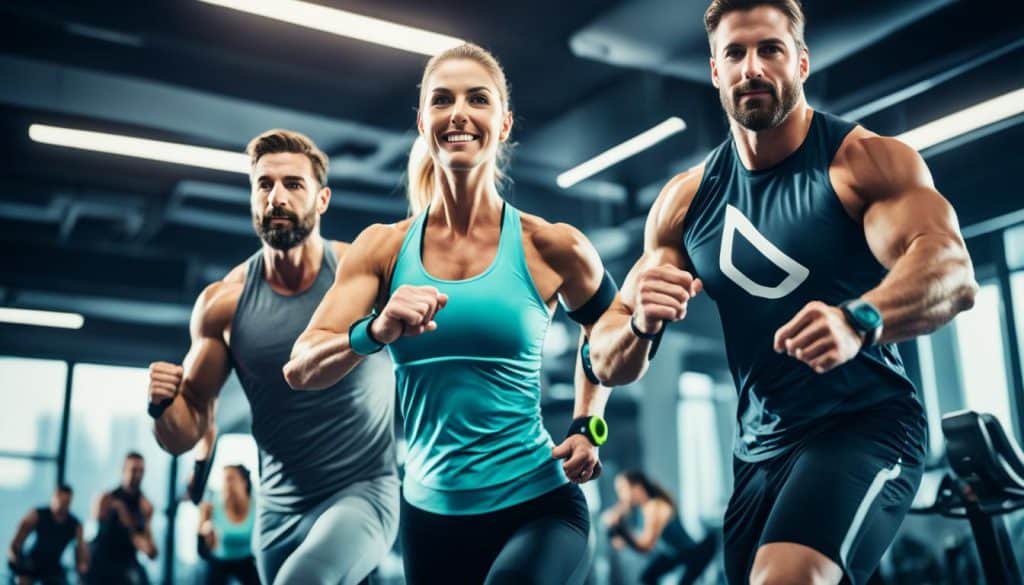
The fitness wearable industry is growing fast. Fitbit got 2,000 pre-orders at its first TechCrunch 50 in 2008. By 2009, they shipped 5,000 units and had 20,000 orders waiting.
Polar, founded in 1977, now has 1200 employees worldwide. They have offices in 26 countries and sell in over 80. Polar is a big name in wearable tech.
Garmin has over 18,000 employees worldwide. They aim to help people follow their passions with new wearable tech innovations.
Wearable devices are for everyone, from top athletes to regular people. Even though they might not be perfect for sports or health, they’re good enough for general fitness tracking.
As wearable tech gets better, it’s changing the fitness and wellness world. These devices let us track and monitor our health in real-time. This helps us take charge of our well-being.
Outdoor and Low-Impact Workouts
Adding outdoor exercise to your routine brings physical and mental benefits. Activities like hiking, cycling, and jogging let you enjoy nature and boost your heart rate. These workouts help you connect with nature and can ease stress and lift your mood.
For those looking for easy workouts, there are many choices. These focus on mindful movement and relaxation, fitting everyone’s fitness level. Yoga and Pilates improve muscle strength, balance, and life quality. You can adjust these exercises to fit your fitness goals and level.
Swimming and cycling are great alternatives to gym workouts. They work out your whole body without putting too much strain on your joints. Swimming is especially good for people with knee problems. It helps with weight loss and makes walking easier.
Low-impact workouts also boost your mental health. Adding mindful meditation to these workouts helps you connect more with your body. It reduces stress, increases self-awareness, and betters mental health.
When planning your workouts, think about your fitness goals and health. A personal trainer can help make a workout plan that suits you. They make sure you move right and avoid injuries.
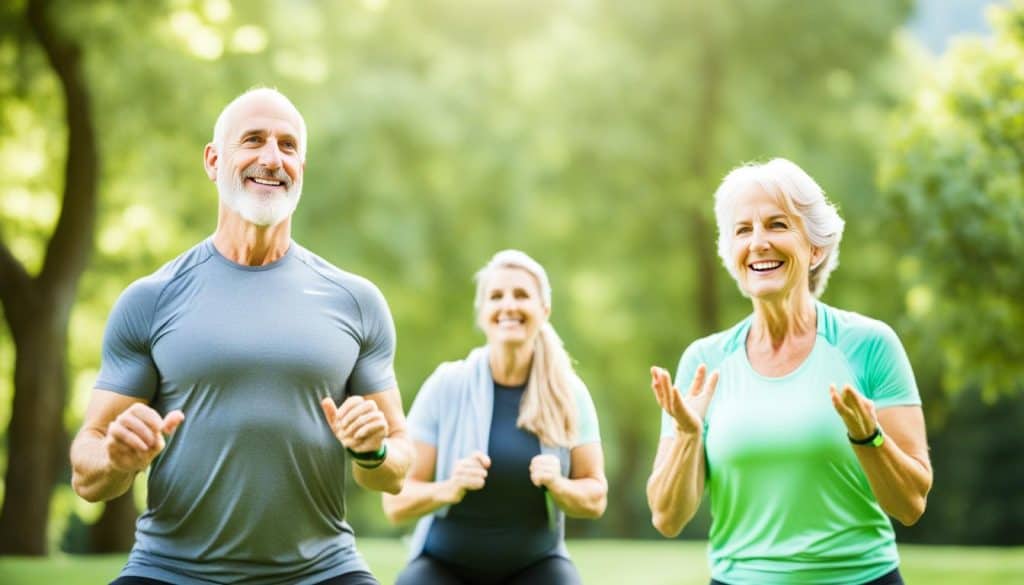
Outdoor and low-impact workouts are great for all ages and fitness levels. You can hike, do yoga on the beach, or cycle in the park. These activities offer a well-rounded way to stay fit and healthy. So, put on your shoes, grab your mat, or get into the pool, and enjoy the outdoors and low-impact exercises.
Shorter, More Frequent Workouts
Many people are now choosing shorter, more frequent workouts over long ones. They break their workouts into mini sessions during the day or focus on one body part at a time. High-intensity interval training (HIIT) is a favorite, with short intense exercises followed by rest.
Research shows these short workouts can be as good, or even better, than long ones for reaching fitness goals. For instance, a 2015 study compared short, frequent workouts with longer ones. It found that short sessions were just as effective.
This shift to shorter workouts is about being convenient and improving fitness and health. Gyms can offer mini workouts for specific goals or muscle groups. This approach helps attract people wanting quick and effective workouts.
Adding high-intensity interval training (HIIT) to these mini workouts boosts their benefits. HIIT means short, intense exercises with rest or low-intensity periods. It’s great for heart health and burning calories quickly. Studies also show HIIT helps with cardio fitness and losing weight.
Benefits of Shorter, More Frequent Workouts
- Time efficiency: Short workouts fit easily into a busy life.
- Increased motivation: Smaller sessions are easier to start and stick with.
- Improved cardiovascular fitness: HIIT boosts heart health.
- Effective calorie burn: HIIT workouts burn calories fast.
By offering mini workouts, fitness pros can meet the changing needs of those seeking quick and effective workouts. This approach can draw in new clients and help current members use their gym time well.
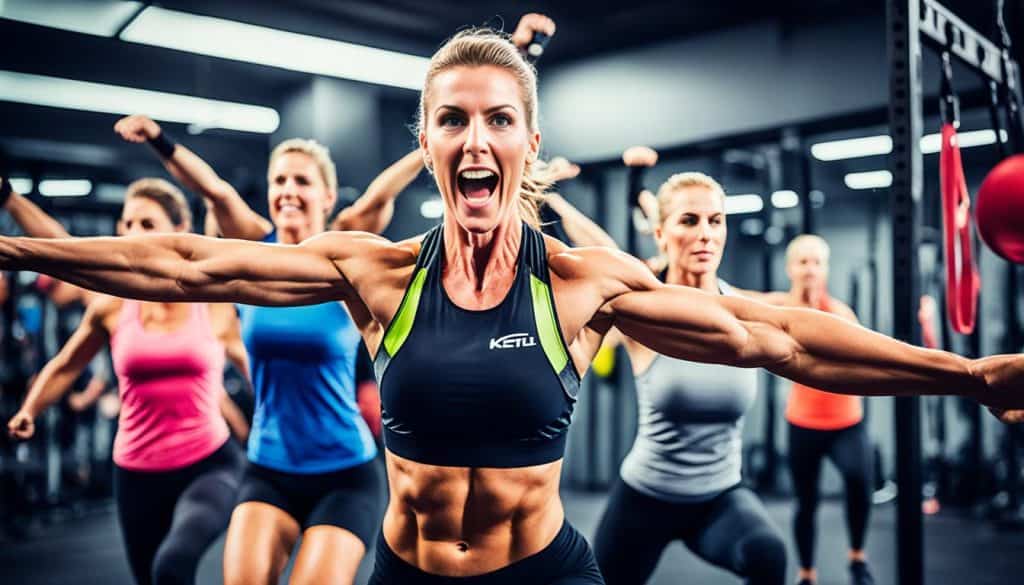
Adding shorter, more frequent workouts to your routine can change the game. With HIIT and other mini workouts, reaching fitness goals doesn’t need to take all day. Whether it’s a quick HIIT session at lunch or focusing on certain muscles, these workouts are powerful. So, if you want a quick and effective way to stay fit, try shorter, more frequent workouts.
Mental Health and Mindfulness
Recently, the focus on mental well-being has grown. People now see how crucial their mental health is for a good life. That’s why mindfulness has become more popular for better mental health.
Mindfulness means being fully in the moment and aware. It helps with stress, anxiety, and depression. Studies show it can also help with addictive behaviors[1][3][4].
There are many ways to practice mindfulness, making it easy for everyone. Programs like Mindfulness-Based Stress Reduction (MBSR) and Mindfulness-Based Cognitive Therapy (MBCT) are effective[4][9].
People say mindfulness makes them more aware of themselves. It helps with focus and relationships[6]. Adding it to exercise makes these benefits even better.
Exercise is great for mental health. It releases happy feelings and lowers stress hormones[15]. Adding mindfulness to workouts makes you more aware and less anxious[18].
Mindful movement combines exercise with mindfulness. Activities like yoga and Pilates help the mind and body. This approach improves mental health[18].
Using mindfulness and exercise together is a great way to feel better overall. It helps manage stress and boosts mood. By doing both, you can improve your mental health and enjoy life more.
- Positive impact of prescribed physical activity on symptoms of schizophrenia: randomized clinical trial
- Depression among Indian university students and its association with perceived university academic environment, living arrangements and personal issues
- Physical activity and mental health: the association between exercise and mood
- Functional improvement and social participation through sports activity for children with mental retardation
- Mindfulness-Based Cognitive Therapy (MBCT) is recommended by the National Institute for Health and Care Excellence (NICE) to prevent relapse in recurrent depression
- Regular physical activity stimulates the release of endorphins, neurotransmitters that create feelings of happiness and euphoria
- Exercise has been proven to reduce stress hormone levels in the body, such as cortisol and adrenaline
- Incorporating different training modalities like yoga, Pilates, Tai Chi, and functional fitness can strengthen the mind-body connection and improve mental well-being
- Comprehensive workout routines that include cardiovascular fitness, strength training, flexibility, and mind-body practices are recommended to optimize mental health benefits
References
- Curcic D, Stojmenovic T, Djukic-Dejanovic S, et al. Positive impact of prescribed physical activity on symptoms of schizophrenia: randomized clinical trial. Psychiatr Danub. 2017;29:459–465.
- Deb S, Banu PR, Thomas S, Vardhan RV, Rao PT, Khawaja N. Depression among Indian university students and its association with perceived university academic environment, living arrangements and personal issues. Asian J Psychiatr. 2016;23:108–117.
- Peluso MA, Guerra de Andrade LH. Physical activity and mental health: the association between exercise and mood. Clinics (Sao Paulo) 2005;60:61–70.
- Ghosh D, Datta TK. Functional improvement and social participation through sports activity for children with mental retardation. Prosthet Orthot Int. 2012;36:339–347.
- Yoga therapy as an add-on treatment in the management of patients with schizophrenia–a randomized controlled trial. Duraiswamy G, Thirthalli J, Nagendra HR, Gangadhar BN. Acta Psychiatr Scand. 2007;116:226–232.
Recovery and Inner Health
It’s not just about working out in fitness. Recovery and inner health are key for top performance. Knowing how to recover well can boost your training and prevent issues like not being able to perform at your best.
Active recovery helps manage fatigue, which can lower your performance. Aim for a full day of rest each week to let your body recharge. This means skipping workouts for at least two sleep cycles. It’s also important to balance your workouts, focusing on cardio, strength, and flexibility exercises.
Tools like foam rollers and massage guns can help with recovery, but their effectiveness varies. Using compression clothes and foam rolling can help with muscle recovery. Yet, the impact of ice baths on recovery is still unclear. Try different methods to see what works best for you.
Now, focusing on inner health and boosting your immune system is big in fitness. Seeing how exercise, recovery, and immune health link is crucial. Putting health first over looks is a new trend. Adding yoga, meditation, and mindfulness can help with mental recovery and overall well-being.